










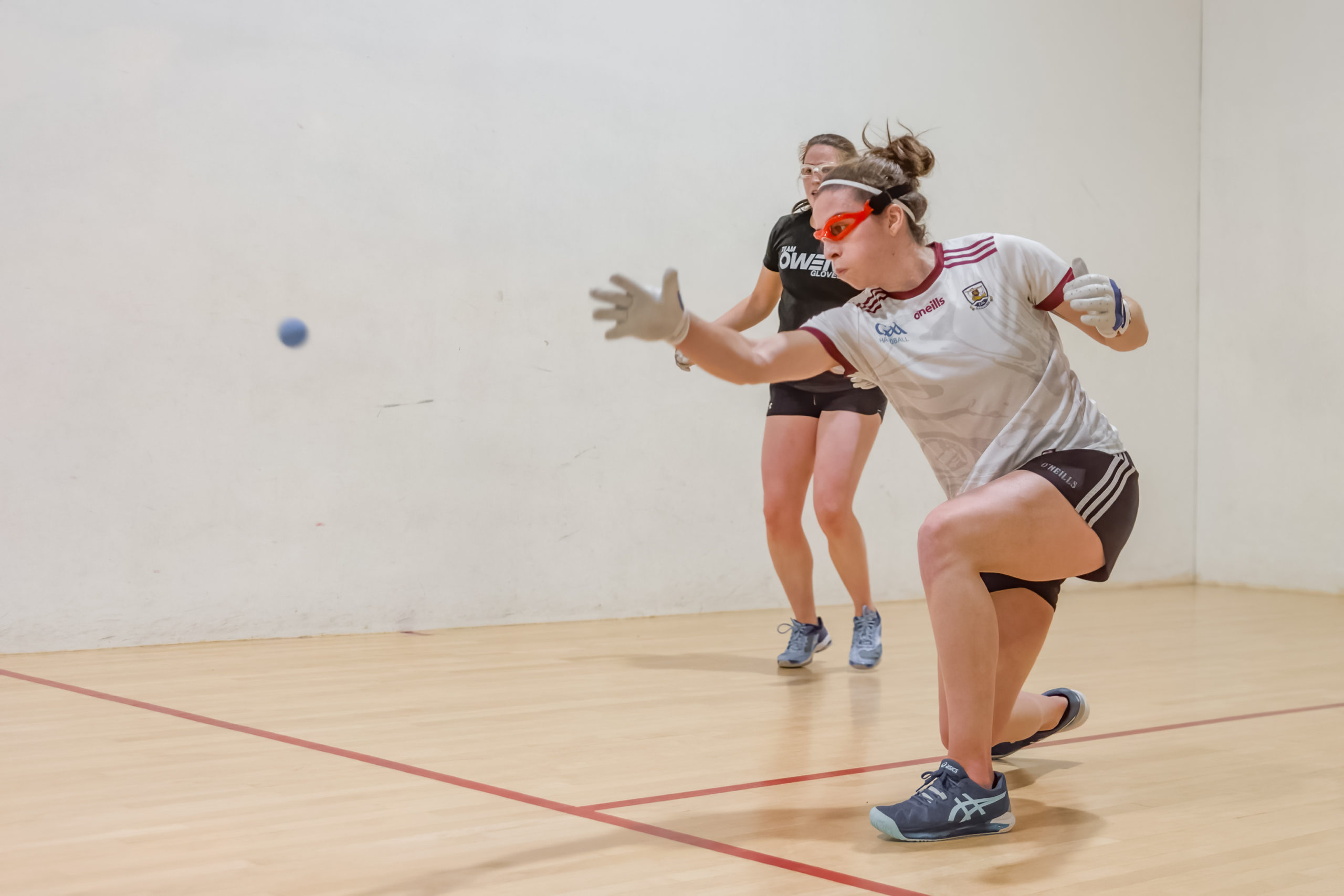
Written by JR WPH Coach Ciana Ni Churraoin
JR WPH Press, Tucson, AZ, 7/26/26
JR WPH was thrilled to welcome WR48 champion, All-Ireland champion, and World Champion Ciana Ni Churraoin (HERE) to our illustrious group of JR WPH handball coaches to inspire the next generation of players.
In Coach Ciana’s first JR WPH instructional, Coach Ciana Ni Churraoin poses the question, “Do coach expectations actually impact their players’ development and performances?”
Do Coach Expectations Actually Impact Their Players’ Development & Performances
Written by JR WPH Coach Ciana Ni Churraoin
If I was going to make this as short as possible, I would simply say “yes – of course coaches expectations impact their players development and performances’’, but the key to truly working with young (or older) people to develop is to understand your impact and then choose how to act according to they type of coach you want to be.
The Self-Fulfilling Prophecy
According to the self-fulfilling prophecy, the expectations a coach has about an athlete’s ability / future possibilities will play a role in what that athlete achieves / believes about themselves.
One of the most interesting parts of the self-fulfilling prophecy is that these expectations are often developed in the early stages of seeing someone perform.
Here’s how it works:
Step 1 – Coach Forms Expectations
The coach observes athletes in training / performance and develops expectations for their behaviour and performance levels.
Step 2 – Coaches Behavior is Influenced by Expectations
The coaches’ expectations influence how they coach each athlete. These actions are in accordance with their expectations. For example: If I believe that Ciana is lazy, I will not push when she behaves this way. But if I believe Penelope is hard-working, I may question and push Penelope if she is slacking and therefore Penelope knows that I expect more and Ciana knows that it is ok to take it easy.
Step 3 – Coaching impacts Athletes Development and Performance
The different treatment from the coach influences the athletes development and perception of themselves. In the above example, Ciana will come to understand that the coach doesn’t expect her to work hard, so she doesn’t, and she may even believe long-term that she is lazy. Whereas, Penelope will understand that the coach sees her as a hard-working athlete and she may continue to hold this belief long-term.
Step 4 – Athletes Performances led to Reinforcement of Coaching Expectations
The athletes’ development are in accordance with the coaches’ treatment. In this case, Penelope develops quicker because she is pushed to work hard and Ciana develops more slowly as she is allowed to put forth less effort. Long-term, this will lead a coach to believe that their initial judgements / expectations of players are correct and the cycle continues with the next athletes they work with.
(Sternberg Horn, Lox, & Labrador, 2015).
Not every coach is like this, but research highlights that coaches who are aware of and understand the self-fulfilling prophecy are much less likely to let their expectations influence their coaching.
On what may be somewhat a side note, it may seem obvious that we want to be particularly wary when it comes to negative expectations that we place on an athlete (lazy, bad skill level, rude, etc), but we also want to take caution when it comes to what many would call ‘positive’ expectations. The one I want to talk about is the expectation that an athlete will be successful / win. At face value, this is a positive thing and it shows that we believe in our young handball player, right? But often, outcome-based expectations place pressure, increase performance anxiety, and could lead to an athlete thinking they have disappointed us if the expectation is not met (which will happen).
What’s also important to consider, is that our expectations are often not our own. We are constantly influenced by other coaches, by parents, by results, by athletes’ words, by past experiences, and more. So when we project these expectations onto athletes, we may be reinforcing something they have heard time and time again.
Now, it would be easy for me to say “we need to let go of expectations and simply coach the player in the best way we can”, but as humans, that is a very difficult thing to do. We see, we judge, we expect, and if we aren’t aware of that, we then act based on judgment and expectation rather than the thing that will truly help the athlete develop.
So, if we know it is impossible to avoid forming expectations, what can we do to support young handball players’ development and performances?
- Be aware of your expectations: Awareness is the first step to making any type of change. By building awareness, you can choose how you coach, rather than blindly coaching based on your own opinions.
- Be open to the idea that your expectations / judgements are not factually correct: They are your thoughts, and not all of your thoughts are true.
- Believe that people can develop: Even if your expectations are correct at this moment, every single person can develop with the right support and effort. Every handball player has the capacity to improve in this sport.
- Instill belief in your athlete based on their controllable actions and efforts: You don’t even need to talk about the outcome. Help your athlete see what truly matters.
- Emphasis the process: Let your athletes know that regardless of the outcome, you support them and will support them.
Here are some questions to help you understand yourself and your impact as a coach:
- What are my expectations of this athlete?
- How do these expectations impact my coaching style?
- What do I want to remember / do differently?
References:
Sternberg Horn, T., Lox C. L., & Labrador, F. (2015). The Self-Fulfilling Prophecy Theory: When Coaches’ Expectations Become Reality. Applied Sport Psychology: Personal Growth to Peak Performance, 78 – 100.
JR WPH was thrilled to welcome Ciana Ni Churraoin as a JR WPH Coach in 2026. Coach CNC is a Certified Mental Performance Consultant with a Master’s degree in Sport & Exercise Psychology (Minnesota State University, Mankato, 2020), Certified Strength & Conditioning Coach, and experienced handball coach. On the court, CNC has applied her expertise to her own performance which shows through her achievements, such as winning the 40×20 Open World Championships, Senior All-Ireland titles in singles and doubles, and winning a Women’s Race 4 Eight stop in 2024. Coach CNC will be a frequent contributor to the WPH website, social media pages, and YouTube page, providing content for handball players to develop their mental and physical performance. Coach CNC will also coach JR WPH clinics at Race 4 Eight events.
JR WPH Coaches HERE
JR WPH would love to have you join our team. If you are interested in joining Team JR WPH as a coach, please contact JR WPH Director David Fink at David.fink@wphlive.tv
Keep an eye out on juniorhandball.org, as new clinic opportunities and recaps pop up weekly. Want to coach a clinic or a junior handball program? Need more information regarding junior handball? The Junior WPH group spans multiple countries, continents and oceans with clinics happening daily. We can help! Contact WPH Development Director David Fink at david.fink@wphlive.tv
To enable Junior WPH to continue to host junior handball clinics and tournaments across North America with Certified WPH Coaches, the World Players of Handball invites you to make a tax-deductible donation today in supporting the growth of the game. 100% of the donations received by the WPH go towards junior handball development. Donate on-line HERE or send your generous gifts through PayPal (HERE) or by mailing checks to: WPH, 3602 E. Ft. Lowell Rd., Tucson, AZ 85716
Become a handball insider by enjoying never before seen videos, pro commentary, special awards, Sports Casts archives and new episodes, live broadcasts, and much more by supporting the WPH and inspiring the next generation of players through the WPH Patreon program.
Become a WPH Patreon HERE